
China Top Stainless Steel CNC Machining Manufacturer?

Time:2026-10-14 Author:Aria
0%

Choosing a China top Stainless Steel CNC Machining manufacturer requires more than comparing prices. It demands evidence of process control, material knowledge, and consistent delivery. Stainless steel can resist corrosion, yet it can also work-harden, generate heat, and challenge cutting tools. Experienced manufacturers understand these details before production begins.

A capable supplier should support grades such as 304, 316L, 17-4 PH, and other specified alloys. It should also explain achievable tolerances, surface finishes, thread requirements, and inspection methods. Look for calibrated measuring equipment, documented quality procedures, and material certificates that connect each batch to its source. Clear communication matters too. Drawings, prototypes, and production feedback should move efficiently between engineering teams.

Details reveal competence. A reliable factory may review tool paths, control coolant flow, and inspect critical dimensions with CMM equipment. It should provide sample approvals, first-article reports, and traceable packaging when required. Certifications can support credibility, but certificates alone prove little without practical records and responsive service.

Ask difficult questions.

Can the supplier manage thin walls, deep cavities, or tight positional tolerances? Can it repeat the same result across thousands of parts? Does it admit production risks instead of hiding them?

No supplier is perfect. Even strong manufacturers may face tooling delays, material variation, or unclear drawings. The best partners identify these weaknesses early and offer measurable solutions. This guide examines manufacturing capability, quality assurance, customization, communication, pricing, and delivery performance. Its goal is practical: helping buyers select a dependable Chinese CNC machining partner with confidence, not promises alone.
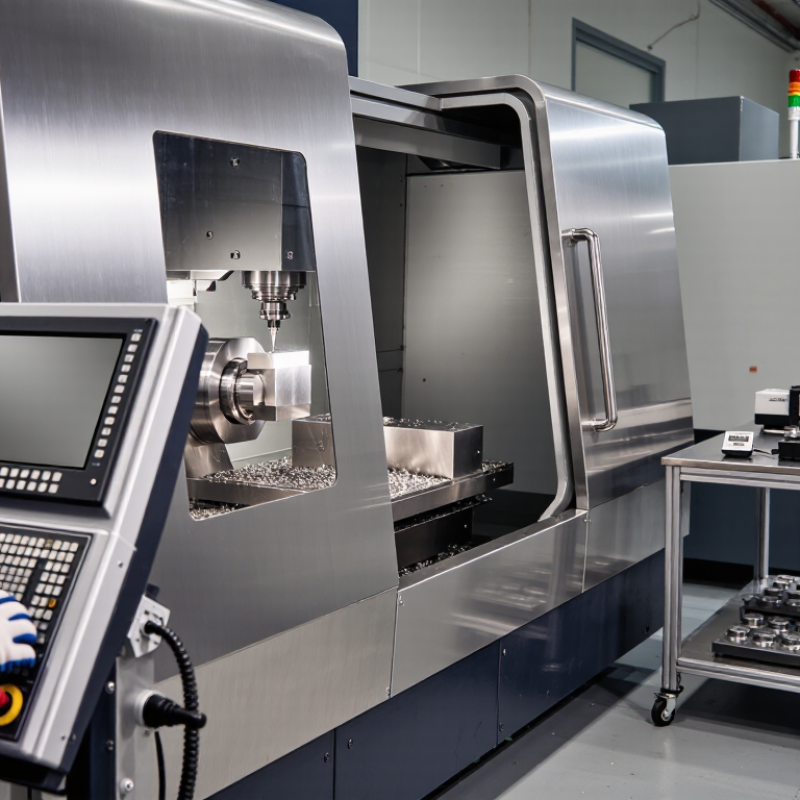
China Top Stainless Steel CNC Machining Manufacturer?

What Is Stainless Steel CNC Machining?

Stainless steel CNC machining is a subtractive manufacturing process. A computer-controlled cutting tool removes material from stainless steel stock. It produces accurate parts for medical, food-processing, energy, and industrial equipment. According to worldstainless, global crude stainless steel production reached 58.4 million tonnes in 2023. This scale reflects strong demand for corrosion-resistant components.

The process may include milling, turning, drilling, and boring. Stainless steel creates challenges because it work-hardens during cutting. Excessive speed can generate heat, damage tools, and leave a rough surface. Experienced machinists select sharp carbide tools, stable fixtures, and controlled coolant flow. Tolerances often depend on material grade, geometry, machine condition, and inspection methods. ISO 2768 can guide general tolerances, but critical dimensions need drawing-specific controls. A perfect finish is not always necessary. Over-machining can increase cost without improving performance.

Tips:

Confirm the stainless steel grade before programming. Use lower cutting speeds when heat builds quickly. Keep tools sharp and avoid stopping inside the cut. Measure critical features after the part returns to room temperature. Surface roughness targets should match the sealing, cleaning, or sliding function. Small design changes, such as adding proper corner radii, can reduce vibration and tool wear. CNC results can still vary, so first-article inspection remains important.

Why Choose a Chinese Stainless Steel CNC Machining Manufacturer?

Choosing a Chinese stainless steel CNC machining manufacturer can reduce production costs without sacrificing engineering control. Experienced factories commonly process 304, 316L, and precipitation-hardening stainless steel. They understand how cutting speed affects heat, burrs, and tool wear.

Small details matter.

A capable engineering team reviews tolerances, thread depth, wall thickness, and surface requirements before machining. During production, inspectors may use calipers, micrometers, and coordinate measuring machines to verify critical dimensions.

Material certificates and inspection reports also improve traceability. These records help engineers identify problems before parts reach assembly.

China also offers a broad manufacturing supply chain. Local access to precision tooling, finishing services, and heat treatment can shorten development cycles. Clear technical communication remains essential. A supplier should confirm drawings, revision numbers, packaging needs, and delivery schedules in writing. Samples should be tested before larger production runs begin.

No supplier is perfect.

Time-zone differences can slow decisions, and translated specifications may create confusion. That risk is real. Regular video inspections and detailed quality agreements can reduce it.

A reliable manufacturer welcomes corrective feedback instead of hiding defects. It should explain the cause, show the adjustment, and provide evidence from the next inspection. Cost matters, but stable quality, honest reporting, and practical engineering support often matter more over repeated orders.

How Does the CNC Machining Process Work?

China Top Stainless Steel CNC Machining Manufacturer?

How Does the CNC Machining Process Work?

CNC machining begins with a digital part drawing and carefully checked dimensions. An engineer converts the design into machine instructions through CAD and CAM software. The program controls tool movement, cutting speed, depth, and spindle rotation. Stainless steel requires stable fixturing because it can harden during cutting. Small errors matter.

The machinist secures the material, sets the work coordinates, and checks the tools. The machine then removes material step by step, often using coolant to control heat. Drilling, milling, turning, and threading may happen in different operations. Between operations, measurements confirm critical features with calipers, micrometers, or a coordinate measuring machine. This hands-on inspection is essential. I have seen a part match the drawing but fail during assembly because a burr was overlooked. Perfect programming does not replace practical judgment.

Tips: Choose a realistic tolerance for each feature. Keep the setup rigid and clean. Review tool wear during long production runs. Stainless steel may look smooth, yet its surface can hide heat marks or residual stress. A first-piece inspection can reveal problems before they spread. It is tempting to trust the program completely, but that habit deserves reconsideration. Good machining combines software accuracy, material knowledge, and careful human observation.

China Top Stainless Steel CNC Machining Manufacturer? - How Does the CNC Machining Process Work?
Step Manufacturing Stage What Happens Typical Stainless Steel Data Equipment or Tooling Quality Control and Output
1 Material Selection The stainless steel grade is selected according to corrosion resistance, strength, operating temperature, forming requirements, and final application. 304: general corrosion resistance and good machinability.
316L: improved resistance to chlorides and marine environments.
17-4 PH: high strength after precipitation hardening.
420: hardenable martensitic stainless steel for wear-resistant components.
Material certificates, hardness testers, calibrated measuring equipment, and grade identification systems. Material certificate review, grade verification, surface inspection, and traceability record.
2 Engineering Review The 2D drawing or 3D CAD model is checked for datum references, wall thickness, hole depth, corner radii, threads, tolerances, and manufacturability. Common design considerations include avoiding unnecessarily deep narrow slots, providing tool access, and specifying only the tolerances required for function. CAD/CAM software, technical drawings, digital manufacturing review, and design-for-manufacturing analysis. Approved drawing revision, machining strategy, inspection plan, and documented critical dimensions.
3 Workholding and Setup The raw material is secured and the work coordinate system is established before cutting begins. Stainless steel requires rigid clamping because vibration can reduce tool life and affect surface finish. Soft jaws, fixtures, or vacuum systems may be used depending on part geometry. CNC vise, custom fixture, soft jaws, locating pins, probes, and workholding accessories. Fixture repeatability check, tool offset verification, workpiece alignment, and setup approval.
4 CNC Programming The CAD model is converted into toolpaths and machine code for milling, turning, drilling, tapping, or multi-axis operations. Cutting conditions depend on grade, hardness, tool diameter, tool material, depth of cut, coolant, and machine rigidity. Stainless steel is prone to work hardening if tools dwell or rub. CAM software, CNC milling center, CNC lathe, mill-turn machine, or multi-axis machining center. Toolpath simulation, collision check, post-processor verification, and first-piece approval.
5 Rough Machining Most excess material is removed efficiently while leaving controlled stock for finishing operations. Stable cutting, adequate chip evacuation, and continuous coolant are important. Cutting parameters are adjusted to prevent excessive heat, built-up edge, and work hardening. Carbide end mills, indexable cutters, turning inserts, drills, high-pressure coolant, and chip-control systems. Visual inspection, dimensional checks on reference features, tool wear monitoring, and confirmation of remaining stock.
6 Semi-Finishing Surfaces and features are brought closer to their final dimensions before precision finishing. Semi-finishing balances material removal and dimensional stability. Extra attention is given to thin walls, deep cavities, small holes, and interrupted cuts. Precision carbide tools, reamers, boring tools, thread mills, and controlled tool offsets. Intermediate dimensional inspection, feature-location check, and surface-condition review.
7 Finishing Operations Final passes create the specified dimensions, tolerances, radii, threads, and surface texture. A general CNC tolerance may be approximately ±0. dicha? Fine-finishing end mills, reamers, boring heads, thread mills, turning tools, and finishing passes. Dimensional conformity, thread gauging, flatness and perpendicularity checks, and surface-finish measurement where specified.
8 Deburring and Cleaning Sharp edges, burrs, chips, and machining residues are removed without changing critical dimensions. Typical edge requirements may range from a small edge break to a defined chamfer, depending on the drawing and handling requirements. Manual deburring tools, abrasive pads, tumbling equipment, ultrasonic cleaning, and aqueous or solvent-based cleaning systems. Burr inspection, edge-radius or chamfer verification, cleanliness check, and visual appearance review.
9 Surface Treatment The component may receive passivation, electropolishing, brushing, polishing, bead blasting, or another specified finish. Passivation improves the chromium-oxide surface condition after machining; electropolishing can improve cleanliness and reduce surface roughness. The treatment must match the stainless grade and application. Passivation tanks, electropolishing equipment, blasting equipment, polishing tools, and controlled rinsing systems. Appearance inspection, treatment documentation, cleanliness verification, and testing required by the specification.
10 Final Inspection The completed part is inspected against the approved drawing, purchase specification, and quality plan. Measurements may include length, diameter, hole position, geometric tolerances, threads, hardness, surface roughness, and visual condition. Coordinate measuring machine, height gauge, micrometers, calipers, bore gauges, thread gauges, profilometer, and optical inspection equipment. Inspection report, measurement records, nonconformance review if required, and final acceptance decision.
11 Packaging and Delivery Parts are protected from scratches, contamination, moisture, and contact corrosion during storage and transport. Packaging may include individual wrapping, protective separators, corrosion-resistant packaging, desiccant, labeled cartons, and shock protection. Protective film, clean bags, cartons, foam separators, desiccant packs, labels, and shipment documentation. Quantity verification, packaging inspection, identification label check, and delivery documentation.
Actual cutting parameters, achievable tolerances, surface roughness, and inspection methods depend on the stainless steel grade, part geometry, machine condition, tooling, drawing requirements, and production volume.

What Quality Standards and Services Should Buyers Evaluate?

Choosing a top stainless steel CNC machining manufacturer requires evidence beyond polished photographs.

Start with material control and drawing interpretation. Ask for heat-lot traceability, mill certificates, and positive material identification records.

ASTM A276 or ASTM A479 may suit stainless steel bars, depending on the application.

Verify ISO 2768 tolerances and ASME Y14.5 geometric dimensioning.

Small deviations matter.

The ISO Survey 2022 recorded 1,265,216 ISO 9001 certificates across 189 countries and economies. Certification indicates system discipline, not perfect parts.

Inspection services deserve equal attention.

A capable supplier should offer calibrated gauges, CMM reports, surface-roughness readings, and first-article inspection.

Request reports linked to each production lot or serial number.

Deloitte’s 2024 Smart Manufacturing and Operations Survey found that 86% of manufacturers expect smart manufacturing to strengthen competitiveness within three years.

Digital traceability is useful, but software cannot replace gauge calibration.

Ask whether the factory can provide passivation, electropolishing, deburring, and protective packaging for stainless components.

Lead-time promises should include engineering review, sampling, production, final inspection, and shipping.

Request a written corrective-action process for nonconforming parts. It should identify root causes, containment steps, and verification dates.

Paperwork can mislead.

A practical test is requesting a sample inspection plan before placing an order. Vague answers often reveal weak process control.

Confirm communication frequency, document revision control, and independent inspection access. A low quotation is not automatically a controlled process.

How to Select the Right Manufacturer for Your Project?

China Top Stainless Steel CNC Machining Manufacturer?

How to Select the Right Manufacturer for Your Project?

Selecting a stainless steel CNC machining manufacturer requires more than comparing prices. Check their experience with your alloy, tolerances, surface finish, and production volume. Ask for sample parts, inspection records, and material traceability documents. A capable manufacturer should explain machining methods clearly, including cutting tools, coolant control, and finishing processes. Their quality system should support repeatable results, not only attractive prototypes.

Visit the facility virtually or in person when possible. Look for organized machines, calibrated measuring equipment, and clear inspection procedures. Request a trial order before approving full production. Confirm lead times, packaging details, communication routines, and responses to design changes. A polished website is not proof. My early mistake was trusting promises without reviewing actual inspection data. That caused delays and unnecessary rework. Ask difficult questions early.

Tips: Compare at least three quotations. Study tolerances line by line. Confirm the steel grade before machining begins. Keep drawings revision-controlled. Discuss rejection handling in writing. Choose reliable communication over the lowest price. A small test can reveal large problems. Also, allow realistic delivery time; rushing production may reduce inspection quality.

FAQS

What is stainless steel CNC machining?

It is a subtractive process using computer-controlled tools. The tools remove material from stainless steel stock. It creates accurate parts for medical, food-processing, energy, and industrial equipment.

Which operations are commonly used?

Common operations include milling, turning, drilling, boring, and threading. Different features may require separate setups. Small errors matter.

Why is stainless steel difficult to machine?

Stainless steel can work-harden during cutting. Excessive speed creates heat and damages tools. It may also leave rough surfaces or heat marks.

How can machinists control heat and tool wear?

They use sharp carbide tools, rigid fixtures, and controlled coolant flow. Lower cutting speeds may help when heat rises quickly. Avoid stopping inside the cut.

How does the CNC process usually work?

An engineer checks the drawing and creates machine instructions through CAD and CAM software. The machinist secures the material and sets work coordinates. The machine removes material step by step.

How are machined dimensions inspected?

Critical features may be measured with calipers, micrometers, or coordinate measuring equipment. Parts should return to room temperature before final measurement. First-article inspection can catch problems early.

What should be checked when selecting a manufacturer?

Review experience with your steel grade, tolerances, surface finish, and production volume. Request sample parts, inspection records, and material traceability documents. A polished website proves little.

How can design choices improve machining results?

Proper corner radii can reduce vibration and tool wear. Assign realistic tolerances to each feature. A perfect finish is not always necessary. Over-machining may increase cost without improving performance.

Conclusion

Stainless Steel CNC Machining is a precision manufacturing process that uses computer-controlled equipment to cut, drill, mill, and shape stainless steel parts according to digital designs. It is valued for its accuracy, repeatability, corrosion resistance, strength, and suitability for demanding applications. Chinese manufacturers are often considered by international buyers because they can offer flexible production capacity, competitive pricing, efficient supply chains, and support for both prototypes and large-volume orders.

When evaluating a supplier, buyers should understand the complete CNC workflow, including material selection, programming, machining, inspection, surface treatment, and final packaging. Important factors include equipment capability, dimensional accuracy, quality control procedures, material traceability, certifications, communication, lead times, and after-sales support. The right manufacturer should clearly understand the project requirements, provide transparent quotations, maintain consistent quality, protect technical information, and demonstrate the ability to deliver reliable parts on schedule.

Aria

Aria

Aria is a dedicated marketing professional with a deep passion for innovative strategies and a keen understanding of our company's product offerings. With a wealth of experience in the industry, Aria excels at crafting engaging content that highlights the unique features and benefits of our......