In 2026, manufacturers are demanding tighter tolerances, shorter lead times, and fewer setups. These pressures are reshaping advanced machining services worldwide. 5 Axis CNC Machining stands out because one machine can reach several part faces without repeated repositioning. That capability reduces alignment errors around turbine blades, medical implants, aerospace brackets, and complex molds.
Market data supports this shift. Grand View Research estimates that the global CNC machine market reached approximately USD 88.5 billion in 2023. Its report also projects strong growth through 2030, driven by automation and precision production. The International Federation of Robotics reported 4.28 million industrial robots operating worldwide in 2023. Robotics does not replace machining, but it strengthens unattended loading, inspection, and repeatability. These figures reveal a broader manufacturing direction: connected, flexible, and data-led production.
Forecasts are not identical.
This guide evaluates five leading 5 Axis CNC Machining services for 2026. The comparison considers machine capability, material experience, tolerance control, inspection systems, delivery reliability, and engineering support. Real-world performance depends on more than a machine’s specification sheet. A supplier may advertise micron-level accuracy, yet fixture design, tool wear, operator judgment, and temperature control can change the finished part. That detail is easy to overlook. It should not be.
The assessment draws on published industry research, manufacturing practice, and practical supplier-selection criteria. It also acknowledges uncertainty. Market reports use different definitions, and service quality can vary between facilities. Readers should verify certifications, sample parts, inspection records, and production references before approving a supplier.
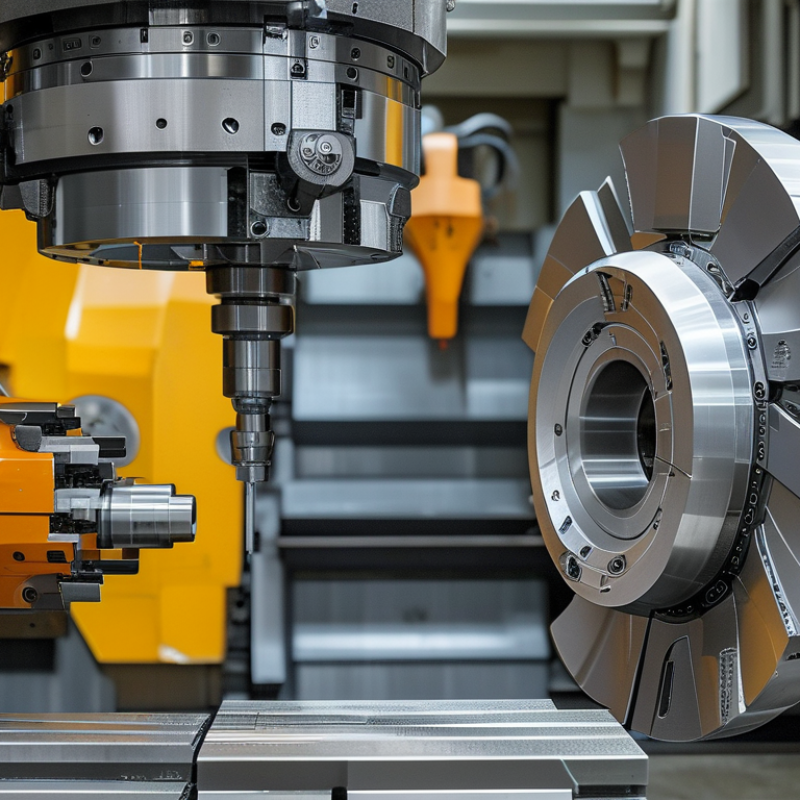
Key Criteria for Comparing 5-Axis CNC Machining Services in 2026
What Are the Top 5 Axis CNC Machining Services in 2026?
Key Criteria for Comparing 5-Axis CNC Machining Services in 2026
The best 5-axis service is not always the cheapest. Compare five practical points: positional accuracy, repeatability, machine travel, inspection capability, and delivery reliability. A supplier should explain tolerance results, not only publish impressive numbers. ISO 230-2 testing can support positioning claims, while CMM reports verify finished parts. Deloitte’s 2024 Smart Manufacturing and Operations Survey found that 86% of manufacturing leaders expect smart manufacturing to drive competitiveness within five years. That shift makes digital inspection records increasingly important.
Material experience matters too. Ask how the shop handles titanium, hardened steel, aluminum, and heat-sensitive plastics. Review spindle power, tool control, fixture design, and simultaneous five-axis movement. A large work envelope can reduce setups, but it does not guarantee better accuracy. Grand View Research’s 2024 CNC machine market analysis projects strong market growth through 2030, increasing service choices and pricing pressure. More options can help. They can also hide uneven quality.
Tips: Request three sample inspection reports, not marketing photographs. Check actual lead times for a similar part. Ask whether programming, finishing, and inspection happen internally. I would also compare scrap rates, although many providers will not disclose them. That gap deserves careful questioning. A perfect scorecard is rare; consistent evidence is more valuable.
5-Axis CNC Milling for Complex and High-Precision Components
In 2026, five-axis CNC milling is increasingly important for complex, high-precision components. The five strongest service categories include simultaneous milling, indexed 3+2 machining, rapid prototyping, low-volume production, and inspection-led manufacturing.
Simultaneous five-axis milling cuts impellers, turbine blades, medical housings, and aerospace brackets in fewer setups. This reduces repositioning errors and improves surface continuity. Indexed 3+2 machining suits parts with several angled faces but simpler toolpaths. Rapid prototyping helps engineers test a titanium bracket before committing to production. Low-volume machining supports custom fixtures, replacement parts, and controlled production runs. Inspection-led manufacturing adds probing, first-article checks, and coordinate measuring machine reports. Small details matter.
Experienced machinists review material behavior, wall thickness, datum structure, and tool access before cutting metal. A 0.02-millimeter tolerance may be realistic on one feature, but excessive across an entire complex part. Tool deflection, heat, vibration, and clamping pressure can change the result. For this reason, reliable services connect CAD programming with documented process controls and traceable inspection records. I would not promise perfection from a drawing alone. Sometimes, the design itself needs refinement. A deeper corner radius or revised datum can improve accuracy, tool life, and cost. Surface finish should also match the component’s function, not merely its appearance.
5-Axis CNC Mill-Turn Machining for Multi-Feature Parts
What Are the Top 5 Axis CNC Machining Services in 2026?
5-axis mill-turn machining is becoming a practical choice for multi-feature parts. According to Fortune Business Insights, the global 5-axis CNC machine market was valued at about USD 10.7 billion in 2022. The report projects continued growth through 2030. This demand reflects shorter setups, tighter accuracy, and fewer handling errors.
A capable service combines turning and milling in one coordinated process. It can machine a shaft with radial holes, angled slots, threads, and contoured faces without repeated clamping. Picture a titanium housing rotating under a live tool, while coolant clears chips from a deep pocket. Fewer setups can protect datum alignment. That matters when tolerances approach ±0.01 millimeters.
According to MarketsandMarkets, the CNC machine market is expected to expand steadily this decade, supported by aerospace, medical, and automotive production. Yet five-axis capacity alone proves little. Engineers should review spindle reach, collision simulation, probing strategy, and inspection records. A 2024 manufacturing technology survey by Deloitte also highlights skills shortages and production efficiency as persistent industry concerns. Programming still needs experienced judgment.
Mistakes remain possible.
Thin walls can vibrate. Heat can distort results. A rushed toolpath may leave marks on a visible surface. Reliable providers therefore compare first-article measurements with the CAD model and record material certificates. The best process is not always the fastest one. Sometimes, one extra inspection cycle prevents an expensive remake.
What Are the Top 5 Axis CNC Machining Services in 2026?
5-Axis CNC Mill-Turn Machining for Multi-Feature Parts
This chart shows the ISO 2768-1 medium-class general dimensional tolerances commonly used as a baseline when specifying machined parts. Tighter tolerances may require dedicated workholding, controlled inspection, and process-specific planning. Actual results depend on material, geometry, machine condition, tool wear, and inspection method.
Reference: ISO 2768-1, tolerance class m, linear dimensions in millimetres.
Simultaneous 5-Axis Machining for Advanced Surface Geometry
What Are the Top 5 Axis CNC Machining Services in 2026?
Simultaneous 5-Axis Machining for Advanced Surface Geometry
Simultaneous 5-axis machining moves the cutter across three linear and two rotary axes at once. This motion keeps the tool closer to the ideal cutting angle. It is valuable for turbine blades, orthopedic components, impellers, and aerospace housings with blended surfaces.
According to Grand View Research, the global CNC machine market was valued at approximately USD 86.8 billion in 2023. The report also projects strong growth through 2030, supported by automation and complex-part production. The International Federation of Robotics reported 541,302 industrial robots installed worldwide in 2023. These figures indicate a wider shift toward connected, highly controlled manufacturing cells.
In practical work, 5-axis cutting can reduce setups, fixture marks, and alignment errors. A single setup may machine a curved housing from several directions. That saves handling time, but it does not remove every risk. Tool deflection, thermal drift, and poor collision checking can still damage an expensive part. A simulated path may look clean, yet the finished surface can show slight scallop variation. Experienced programmers verify holder clearance, material behavior, and inspection points before release. Sometimes, a slower toolpath produces the more reliable result.
What Are the Top 5 Axis CNC Machining Services in 2026? - Simultaneous 5-Axis Machining for Advanced Surface Geometry
| Rank |
5-Axis CNC Machining Service |
Typical Applications |
Common Materials |
Simultaneous Axes |
Typical Linear Tolerance |
Typical Surface Finish |
Key Advantages |
| 1 |
Aerospace Structural and Airframe Components |
Ribs, spars, brackets, bulkheads, housings, and lightweight structural parts |
Aluminum alloys, titanium alloys, stainless steel, nickel alloys, and engineering plastics |
5 |
±0.025–0.075 mm |
Ra 0.8–3.2 µm |
Fewer setups, improved positional accuracy, deep-pocket access, and efficient machining of thin-wall geometry |
| 2 |
Impellers, Blisks, and Turbomachinery Parts |
Centrifugal impellers, compressor blades, blisks, pump rotors, and turbine components |
Aluminum alloys, titanium alloys, nickel-based superalloys, stainless steel, and tool steel |
5 |
±0.015–0.050 mm |
Ra 0.4–1.6 µm |
Continuous tool orientation, reduced blade scalloping, fewer witness marks, and accurate control of curved airfoil surfaces |
| 3 |
Medical and Surgical Components |
Orthopedic instruments, bone plates, surgical guides, prosthetic components, and custom implants |
Titanium alloys, cobalt-chromium alloys, stainless steel, PEEK, and medical-grade aluminum |
5 |
±0.020–0.050 mm |
Ra 0.4–1.6 µm |
Accurate organic contours, smooth transitions, reduced repositioning error, and compatibility with detailed inspection requirements |
| 4 |
Molds, Dies, and Advanced Tooling |
Injection molds, die-casting dies, forging dies, forming tools, electrodes, and prototype tooling |
Pre-hardened tool steel, hardened steel, aluminum, copper alloys, graphite, and stainless steel |
5 |
±0.010–0.050 mm |
Ra 0.2–1.6 µm |
Improved access to steep walls and cavities, fewer setups, better corner control, and reduced polishing requirements |
| 5 |
Energy, Fluid-Flow, and Complex Valve Components |
Valve bodies, pump casings, manifolds, turbine parts, nuclear components, and fluid-handling assemblies |
Stainless steel, duplex steel, nickel alloys, titanium alloys, bronze, and aluminum alloys |
5 |
±0.025–0.075 mm |
Ra 0.8–3.2 µm |
Accurate intersecting passages, improved sealing surfaces, reduced fixture changes, and efficient machining of compound-flow geometries |
Note: The values shown are typical industrial capability ranges for simultaneous 5-axis CNC machining. Actual tolerances and surface finishes depend on material, part size, geometry, machine condition, cutting tools, workholding, programming strategy, and inspection requirements.
Custom 5-Axis Prototyping and Low-Volume Production Services
What Are the Top 5 Axis CNC Machining Services in 2026?
Custom 5-axis prototyping and low-volume production now demand more than fast cutting. They require controlled movement, clear communication, and dependable inspection. The strongest service teams usually provide five capabilities: rapid prototype machining, low-volume production, complex surface work, tight-tolerance components, and complete inspection support.
A useful prototype should reveal design problems early. Engineers can test thin walls, angled holes, deep pockets, and curved surfaces before committing to larger quantities. Experienced machinists review tool access, fixture positions, material behavior, and expected distortion. That review can prevent expensive revisions. Sometimes, however, a first setup still fails. That is normal. A small mark near a clamping point may expose a weak process plan.
Low-volume production needs the same discipline as larger manufacturing runs. Repeatable programs, stable workholding, and documented measurements help maintain consistency across every batch. Suitable materials may include aluminum, stainless steel, titanium, engineering plastics, and other approved alloys. Inspection reports should connect directly to drawing requirements, not vague quality claims. Surface finishing, deburring, and edge treatment also deserve attention.
Details matter greatly.
Reliable providers explain achievable tolerances before quoting. They identify risks instead of hiding them. They also protect design files and confirm revision control at each stage. For custom parts, a practical conversation about quantity, geometry, material, finish, and delivery pressure often reveals more than a polished sales page.
FAQS
: It combines turning and milling in one coordinated setup. A part can rotate while live tools cut holes, slots, threads, and contoured faces. Fewer clamping changes can protect alignment.
It suits shafts, housings, and other multi-feature parts. Useful details include radial holes, angled slots, deep pockets, and curved surfaces. Complex geometry benefits most.
Fewer setups can reduce datum shifts and handling errors. Tolerances near ±0.01 millimeters may be possible, depending on material and design. Do not assume five axes guarantee accuracy.
Yes, especially for complex prototypes with thin walls or angled features. A prototype can expose tool-access problems before larger production. The first setup may still fail.
Common options include aluminum, stainless steel, titanium, engineering plastics, and other approved alloys. Material behavior affects heat, vibration, and distortion. Titanium needs careful heat control.
Ask for first-article measurements compared with the CAD model. Material certificates and drawing-based inspection reports are also valuable. Vague quality statements are not enough.
Thin walls may vibrate, and heat may distort the part. A rushed toolpath can leave visible marks. One extra inspection cycle may prevent an expensive remake.
Share quantity, geometry, material, tolerances, surface finish, and delivery expectations. Revision control also matters. Clear communication helps, but it cannot replace experienced programming judgment.
Conclusion
Choosing the top 5 Axis CNC Machining services in 2026 requires more than comparing prices. Important criteria include dimensional accuracy, machine capability, material compatibility, surface finish, lead time, quality control, engineering support, and the ability to manage complex designs. A reliable provider should also offer clear communication, repeatable results, and scalable production options.
The leading service categories include 5-axis CNC milling for intricate, high-precision components; 5-axis mill-turn machining for parts that combine turning and milling features; and simultaneous 5-axis machining for smooth, advanced surface geometry with fewer setups. Custom 5-axis prototyping and low-volume production are also valuable for testing designs, reducing development risk, and producing specialized parts efficiently. Together, these capabilities help manufacturers improve accuracy, shorten production cycles, reduce handling errors, and support projects ranging from early prototypes to demanding end-use components.