1 / 1

When you’re sourcing aerospace components, precision and reliability aren’t just “nice to have” — they’re mandatory. A small tolerance issue in a stainless steel turned part can compromise the performance of an entire system. That’s why aerospace OEMs often choose CNC machining of stainless steel alloys such as 17-4PH and 303, which combine mechanical strength with corrosion resistance.
Our factory has worked with aerospace clients for over a decade, supplying tight-tolerance CNC turned parts for applications ranging from landing gear actuators to satellite hardware. After passing rigorous audits by aerospace customers, our machining process has been praised for its stability, accuracy, and consistency.
| Alloy | Key Properties | Aerospace Applications |
|---|---|---|
| 17-4PH Stainless Steel | High strength, excellent corrosion resistance, heat-treatable to 1100 MPa tensile strength | Turbine components, fasteners, structural supports |
| 303 Stainless Steel | Superior machinability, good corrosion resistance, suitable for high-volume CNC turning | Connectors, sleeves, bushings, non-critical aerospace fittings |
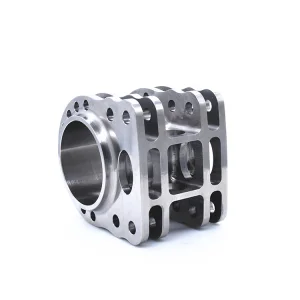
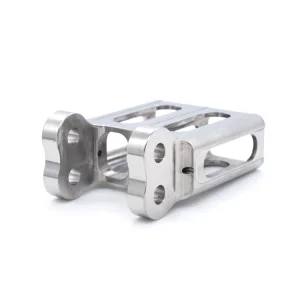
During one project for an aerospace actuator housing, we machined 17-4PH stainless steel to ±0.005 mm tolerances. Despite its high hardness, our team optimized cutting speeds and tool paths to maintain surface finish Ra ≤ 0.8 µm. This reduced post-machining polishing time by 25%.
17-4PH and 303 stainless steel are highly favored. 17-4PH offers exceptional strength and corrosion resistance, while 303 provides superior machinability for high-volume components.
We are capable of achieving tight tolerances down to ±0.005 mm for complex aerospace materials like 17-4PH stainless steel, ensuring high precision for critical assemblies.
We employ Coordinate Measuring Machines (CMM) and laser scanning for automated inspections, and we provide full material certification like EN10204 3.1 for total traceability.
Through optimized cutting speeds and tool path programming, we can reliably achieve surface finishes of Ra ≤ 0.8 µm on hardened stainless steel, reducing the need for post-machining polishing.
Yes, we provide in-house processes such as heat treatment and passivation to enhance the mechanical strength and corrosion resistance of the machined parts.