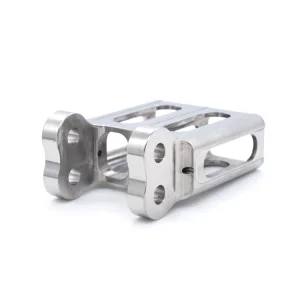
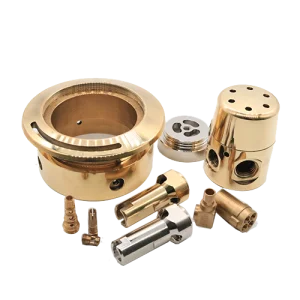
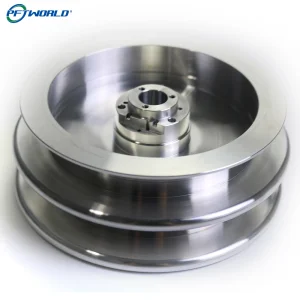
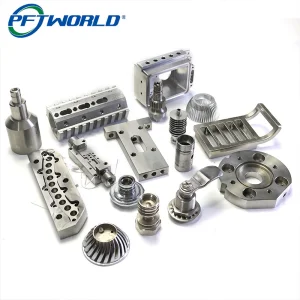
Product Overview
What is 5-Axis CNC Milling?
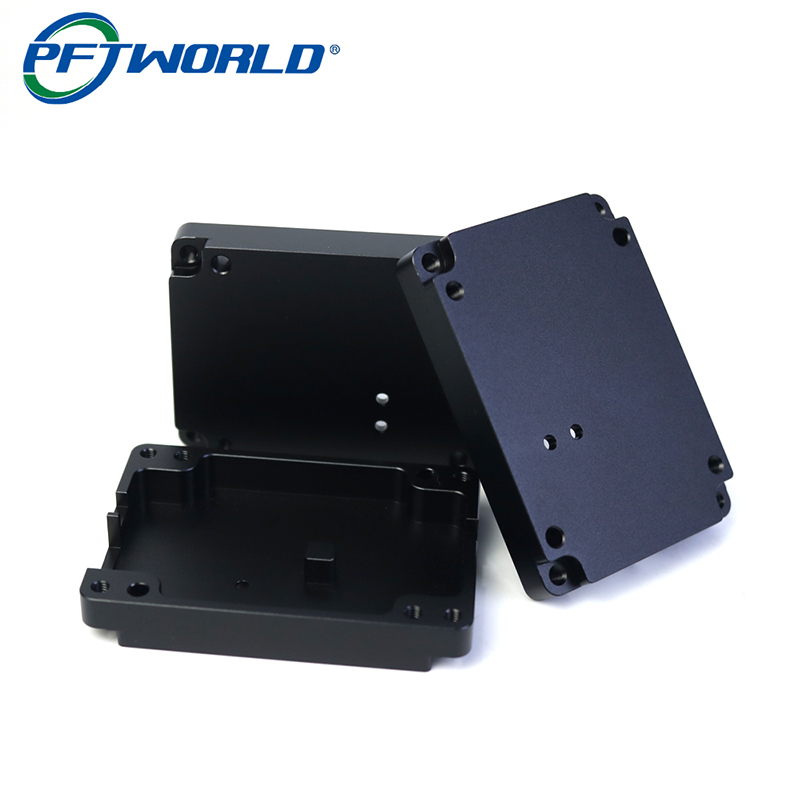
CNC (Computer Numerical Control) milling is a machining process that uses rotary cutters to remove material from a workpiece, typically aluminum, to achieve the desired shape. While traditional CNC milling operates on 3 axes (X, Y, Z), 5-axis CNC milling extends the versatility by adding two more rotational axes: A (tilting the workpiece) and B (rotating the workpiece). This increased range of motion enables the machine to approach the part from virtually any angle, resulting in intricate shapes that would be impossible to achieve using 3-axis machines.
Product Detail
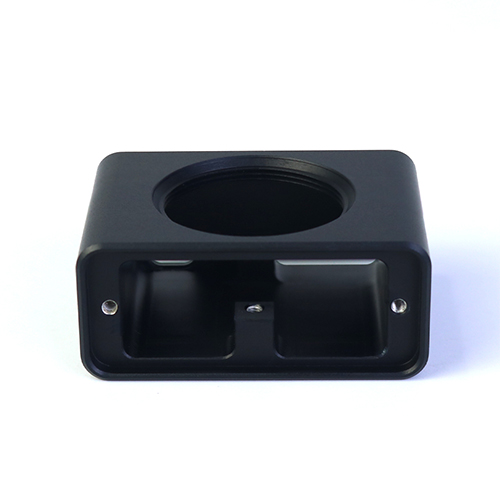
In today's pursuit of excellent performance and high-quality products, 5-axis precision aluminum CNC milling machining parts is becoming the first choice in various industries. With unparalleled precision, complex geometric machining capabilities, and excellent material properties, 5-axis precision aluminum CNC milling machining parts can inject strong competitiveness into your products and help you stand out in the market.
5-axis precision aluminum CNC milling parts are setting a new standard in industries where quality, efficiency, and innovation are paramount. With enhanced accuracy, reduced setup time, and the ability to handle complex geometries, these advanced machining solutions unlock new possibilities in design and performance. As industries continue to demand higher precision and more intricate parts, 5-axis CNC milling will remain at the forefront of manufacturing technology, empowering businesses to produce cutting-edge components for an increasingly complex world.
Advantages of 5-axis precision aluminum CNC milling
-
Ultra high precision: Equipped with advanced 5-axis CNC milling machines, it can achieve micrometer level machining accuracy, ensuring precise part dimensions, high surface smoothness, and meeting strict quality requirements.
-
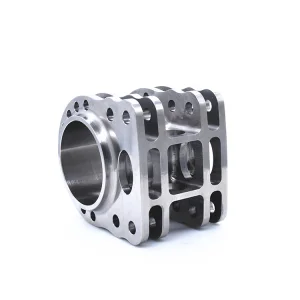
Complex geometric shapes: 5-axis linkage machining can achieve precise machining of complex three-dimensional surfaces, meeting your diverse needs for part shapes and breaking through the limitations of traditional machining methods.
-
Excellent material properties: Aluminum alloy has excellent properties such as light weight, high strength, and corrosion resistance. 5-axis precision machining can fully leverage the advantages of aluminum to create lightweight and high-performance parts.
-
Shorten production cycle: 5-axis CNC milling machine integrates multiple machining processes, reduces clamping times, improves machining efficiency, and shortens product development and production cycles.
Application areas of 5-axis precision aluminum CNC milling
- Aerospace: Used for aircraft engine parts, fuselage structural components, etc.
- Automobile manufacturing: Used for automobile engine cylinder blocks, gearbox housings, chassis parts, etc.
- Medical devices: Used for surgical robots, imaging equipment, prosthetics, etc.
- Electronic products: Used for phone cases, laptop cases, heat sinks, etc.
Conclusion
With unmatched flexibility and extreme accuracy, 5-axis precision aluminum CNC milling is the premier standard for modern manufacturing. By utilizing this technology, companies can achieve unparalleled design freedom, faster processing speeds, and superior component properties that meet the stringent standards of top-tier global industries.
FAQ
What is the machining process of 5-axis precision aluminum CNC milling parts?
The machining process of 5-axis precision aluminum CNC milling parts generally includes the following steps:
- Requirement communication: Communicate drawings, material requirements, and machining accuracy.
- Process design: Design machining processes including sequencing, tool selection, and parameters.
- Programming: Use professional CAM software to write machining programs.
- Processing: Use a 5-axis CNC milling machine for part processing.
- Testing: Use coordinate measuring instruments to test the parts for compliance.
- Surface treatment: Carry out anodizing, sandblasting, etc. according to customer needs.
What is the price for 5-axis precision aluminum CNC milling machining parts?
The price of 5-axis precision aluminum CNC milling parts is influenced by various factors, such as part complexity, material type, processing quantity, etc. We suggest that you contact a professional manufacturer for a detailed quotation.
What is the delivery cycle for 5-axis precision aluminum CNC milling parts?
The delivery cycle depends on the complexity and quantity of the parts. Generally speaking, simple parts can be completed within a few days, while complex parts may take several weeks.
What are the main advantages of 5-axis precision aluminum CNC milling?
The key advantages include ultra-high precision (micrometer level), the ability to machine highly complex geometric shapes, taking full advantage of aluminum's properties (light weight, high strength, corrosion resistance), and a shortened production cycle due to reduced clamping times.
In which fields are these 5-axis CNC milling aluminum parts mostly applied?
They are widely applied in aerospace (engine parts, fuselage components), automobile manufacturing (cylinder blocks, gearbox housings), medical devices (surgical robots, imaging equipment), and electronic products (phone/laptop cases, heat sinks).
How does 5-axis milling improve on traditional 3-axis CNC milling?
Unlike traditional 3-axis milling (X, Y, Z), 5-axis milling adds A (tilting) and B (rotating) axes. This allows the tool to approach the workpiece from virtually any angle, enabling the machining of intricate 3D shapes without the need for multiple setups.