1 / 1

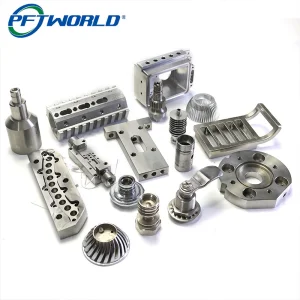
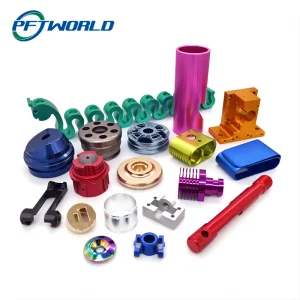
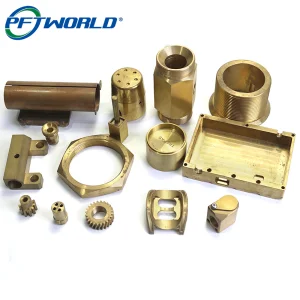
In the world of modern manufacturing, achieving high precision and the ability to create complex geometries is essential, especially for industries that require intricate, one-of-a-kind parts. Custom CNC milling offers an ideal solution for these needs, providing a versatile and efficient way to create custom components with tight tolerances and exceptional detail.
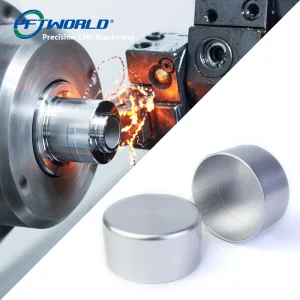
CNC milling (Computer Numerical Control milling) is a manufacturing process that uses a computer-controlled machine tool to remove material from a workpiece. In custom CNC milling, a specific design or specification provided by the customer is used to guide the CNC machine, allowing it to mill the part or component to the exact dimensions and tolerances required.
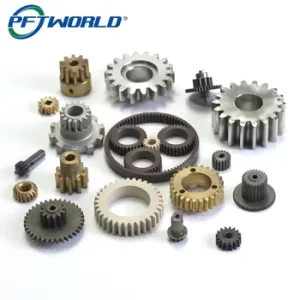
Unlike traditional manual milling, which relies on human operators for accuracy and control, CNC milling is highly automated and offers consistent, repeatable results. It’s used to create parts with complex shapes, holes, slots, and intricate designs, often from materials like metals, plastics, and composites.
Custom CNC milling involves a series of precise steps that transform raw materials into custom-designed components. The process is highly flexible, with various types of milling machines and tools available to cater to different needs.
The process begins with the setup of the CNC machine, where the raw material is securely clamped into the machine bed, and the appropriate cutting tools are selected. The machine's control system is programmed with the design file (usually in the form of a CAD/CAM file), which contains detailed instructions for each milling operation.
The CNC machine uses rotating cutting tools to remove material from the workpiece. The material is typically removed in small, incremental layers. Depending on the complexity of the part, different types of milling operations can be performed, such as:
Once the rough cuts are made, finishing operations are often required to achieve the desired surface finish and tight tolerances. These may include polishing, sanding, or additional milling operations to smooth the part’s surface and achieve the final dimensions.
After the part is milled, it undergoes quality control inspections to ensure it meets the specified dimensions, tolerances, and other quality requirements. This is often done using tools like coordinate measuring machines (CMMs) or laser scanners. Parts may also undergo stress testing, visual inspection, and other assessments based on their intended application.
Custom CNC milling is highly adaptable, allowing manufacturers to work with a broad range of materials. The choice of material depends on the part’s intended application, strength requirements, environmental factors, and cost considerations. Common materials used in CNC milling include:
There are many advantages to choosing custom CNC milling for manufacturing components. Whether you’re producing a one-off prototype or a small batch of specialized parts, CNC milling offers a range of benefits, including:
CNC milling is known for its ability to produce parts with extremely tight tolerances, often as small as ±0.001 inches (0.025 mm). This precision ensures that parts fit perfectly and perform as intended, which is critical in industries like aerospace, automotive, medical devices, and electronics.
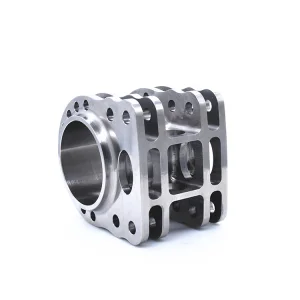
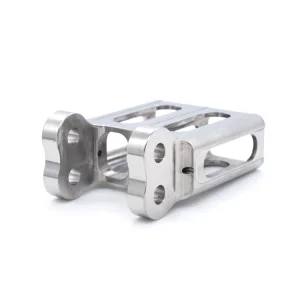
CNC milling allows for the creation of highly complex geometries that would be difficult or impossible to achieve with traditional manual milling. Intricate features, such as cavities, threads, and multi-dimensional cuts, can be easily incorporated into the design.
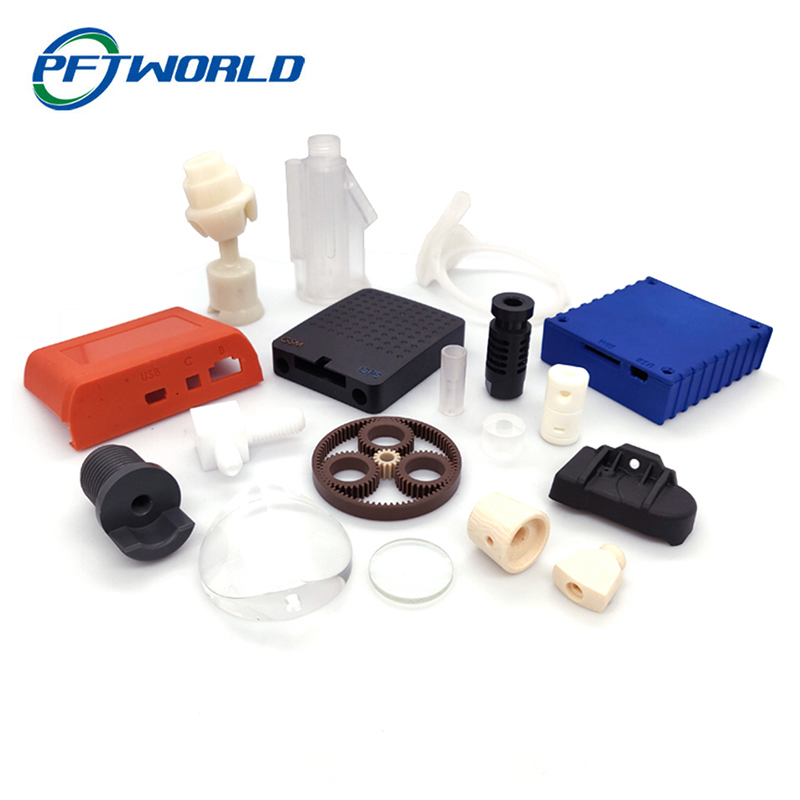
Whether you’re working with metals, plastics, composites, or exotic materials, custom CNC milling can be adapted to accommodate a wide range of materials. This makes it ideal for industries that require both durability and precision in their components.
CNC milling is a highly automated process, meaning once the initial program and setup are complete, parts can be reproduced with consistent quality and accuracy. This is especially important for small batch production runs.
Custom CNC milling is ideal for prototyping, as it allows designers to quickly create and test functional parts. The rapid prototyping capabilities help businesses move from design to production more quickly.
Because CNC milling is a subtractive process, material is removed from a solid block or sheet. This allows for better control over material usage, reducing waste compared to other processes like casting or molding.
Custom CNC milling can be more cost-effective than other methods, such as injection molding or die-casting, especially for low- to medium-volume production without the need for expensive molds.
Custom CNC milling is used across a wide range of industries that demand high precision, durability, and unique design features. Some of the most notable applications include:
Manufacturing lightweight, high-strength parts such as engine components, turbine blades, and brackets that meet stringent safety standards.
Components like gears, engine parts, suspension components, and brackets are custom machined to ensure exact performance specifications.
Creating implants, surgical instruments, and diagnostic equipment requiring extreme precision, reliability, and biocompatibility.
Custom housings, connectors, and enclosures designed to protect sensitive components and ensure proper fit.
Turbines, pumps, valves, and other mechanical components used in power generation, oil and gas, and renewable energy sectors.
Rapid prototyping for product development, custom wooden parts for furniture, and unique artistic creations.

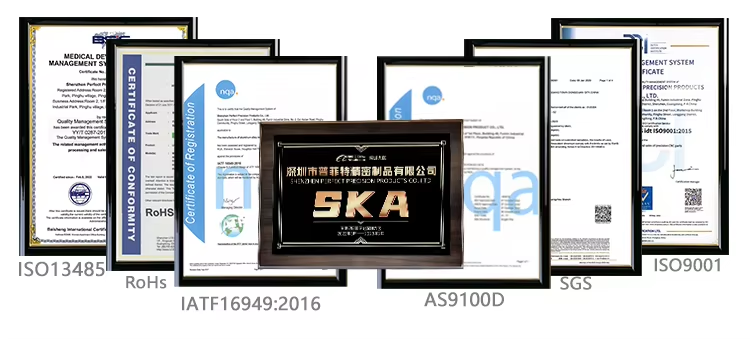
We are proud to hold several production certificates for our CNC machining services, which demonstrates our commitment to quality and customer satisfaction.
ISO13485: MEDICAL DEVICES QUALITY MANAGEMENT SYSTEM CERTIFICATE
ISO9001: QUALITY MANAGEMENT SYSTEM CERTIFICATE
IATF16949, AS9100, SGS, CE, CQC, RoHS
"Great CNC machining, impressive laser engraving, best I've ever seen so far. Good quality overall, and all the pieces were packed carefully."
"Excelente me siento contento me sorprendió la calidad de las piezas un gran trabajo. This company does a really nice job on quality."
"If there is an issue they are quick to fix it. Very good communication and fast response times. This company always does what I ask."
"They even find any errors that we may have made. We have been dealing with this company for a number of years and have always received exemplary service."
"I am very pleased with the outstanding quality of my new parts. The price is very competitive and the customer service is among the best I've ever experienced."
"Fast turnaround, fabulous quality, and some of the best customer service anywhere on Earth."
The primary difference between CNC milling and traditional milling lies in the control of the machine. In CNC milling, the machine is controlled by a computer program that automates the movement of the tool and workpiece, allowing for precise, repeatable cuts and complex geometries. In traditional milling, a machinist manually controls the machine, which can lead to less precision and slower production times.
CNC milling offers numerous advantages, such as increased speed, precision, consistency, and the ability to create parts with intricate designs. Traditional milling is still used in some applications but is less efficient for complex or high-volume production.
CNC milling works through a series of steps, controlled by a computer program:
The time required depends on several factors:
For prototypes, custom CNC milling can often be completed within a few days to a couple of weeks. Production runs depend heavily on quantity and complexity.
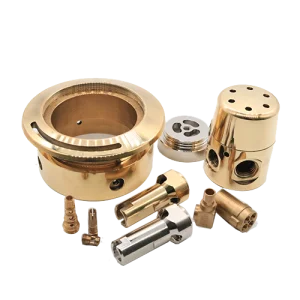
Custom CNC milling is highly versatile and supports various metals (aluminum, stainless steel, titanium, copper, brass), plastics (nylon, acrylic, polycarbonate, Delrin), composites (carbon fiber, fiberglass), wood, and highly specialized exotic materials (like Inconel, PEEK, and ceramics).
It offers extreme precision (tolerances up to ±0.001 inches), the capability to cut complex multi-dimensional geometries, consistent repeatability for batch production, compatibility with a wide range of materials, rapid prototyping workflows, and reduced material waste compared to conventional machining.
It is widely utilized in aerospace (engine components and brackets), automotive (suspension and engine parts), medical fields (implants and surgical instruments), electronics (custom enclosures and connectors), energy sectors (turbines and valves), as well as general prototyping and artistic designs.