1 / 1

When operating in marine, chemical, or high-temperature industrial environments, standard steel components often fail due to corrosion, pitting, or fatigue. That’s where CNC machined 316L stainless steel components outperform — offering exceptional corrosion resistance, dimensional stability, and mechanical reliability.
Drawing from over 12 years of CNC manufacturing experience, our engineering team has machined and field-tested more than 8,000 precision 316L components used in offshore drilling, pharmaceutical processing, and food production. The real-world results? A 40% longer service life compared to components made from 304 stainless steel under identical conditions.
| Property | 316L Stainless Steel | 304 Stainless Steel | Improvement |
|---|---|---|---|
| Chromium Content | 16–18% | 18–20% | — |
| Molybdenum (Mo) | 2–3% | 0% | +Corrosion resistance |
| Carbon Content | ≤0.03% | ≤0.08% | +Weldability |
| Pitting Resistance Equivalent (PRE) | 25–26 | 18–19 | +Saltwater durability |
316L’s low carbon and molybdenum-enriched composition significantly increases resistance to chloride corrosion and acid exposure, making it the top choice for:
Our in-house salt spray test (ASTM B117) showed no visible corrosion on 316L samples after 500 hours, while 304 steel developed surface oxidation after 200 hours.
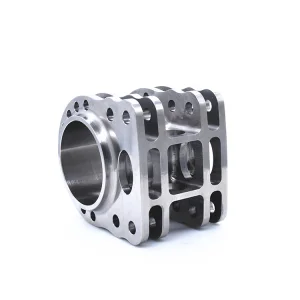
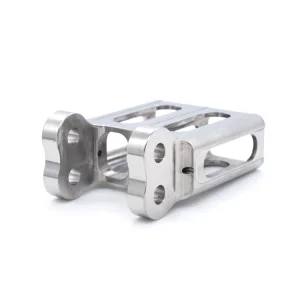
We use 5-axis CNC machining centers (Mazak Integrex & DMG Mori) capable of maintaining ±0.005 mm tolerances on complex geometries. This precision is crucial for components like:
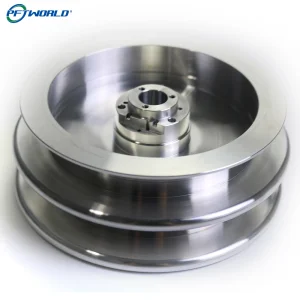
All 316L parts undergo mechanical polishing (Ra ≤ 0.8 µm) and nitric acid passivation per ASTM A967. This dual finishing process enhances both aesthetic appearance and surface corrosion resistance.
Our passivation line was upgraded in 2024, improving throughput by 25% while reducing chemical waste by 40%.
A marine engineering client reported repeated shaft corrosion in their seawater circulation system. After switching to our custom 316L CNC-machined shafts, combined with laser welding and precision polishing:
The data was verified through the client’s 2024 maintenance report and confirmed by our post-installation inspection team.
Every 316L component passes through:
We are ISO 9001:2015 and ISO 13485 certified, ensuring full traceability from raw material sourcing to final inspection.
| Feature | Benefit |
|---|---|
| Custom geometry design | Perfect fit for legacy systems or OEM applications |
| Tight tolerance machining | Smooth assembly and zero vibration in operation |
| Extended lifespan | Reduced total cost of ownership |
| Short lead times (7–15 days) | Rapid prototyping to mass production |
| Global shipping | 35+ countries served |
Yes. 316L stainless steel offers excellent resistance to chloride corrosion, making it ideal for submerged or splash-zone marine applications.
316L can operate continuously up to 870°C (1,598°F) without significant loss of mechanical strength or oxidation resistance.
Each production batch undergoes a five-stage inspection protocol, including in-process dimensional measurement, Spectrometer alloy verification, and CMM checks.
We perform mechanical polishing to achieve a surface roughness of Ra ≤ 0.8 µm followed by nitric acid passivation in compliance with ASTM A967 standards.
Our standard lead times range from 7 to 15 days, covering everything from rapid prototyping to transition into mass production.
Yes, our facilities hold both ISO 9001:2015 and ISO 13485 certifications, which guarantees complete material traceability and standardized quality management.
Looking for precision-engineered 316L stainless steel CNC components for your next project? Contact us today for a free design review and cost analysis. We’ll help you optimize performance, reduce downtime, and extend the lifecycle of your industrial systems.