1 / 1

In the landscape of digital manufacturing and precision engineering, the CNC router table stands out as a versatile and powerful tool. Used across a wide range of industries—from woodworking and sign-making to aerospace and prototyping—CNC router tables offer precise, automated control over complex cutting, carving, and milling tasks. This article explores the function, benefits, applications, and considerations of using a CNC router table in modern machining.
A CNC router table is a computer-controlled machine that automates the process of cutting and shaping materials such as wood, plastic, foam, aluminum, and composites. It consists of a stationary or moving bed (the table), a spindle or router head that holds the cutting tool, and a control system that directs the movement of the tool based on digital design files (CAD/CAM).
Unlike traditional manual routers, CNC router tables use stepper or servo motors to move the tool along multiple axes (typically X, Y, and Z), allowing for precise, repeatable cuts with minimal human intervention.
CNC router tables can execute detailed cuts and engravings with tolerances as tight as ±0.1 mm, ensuring repeatability across multiple parts.
Once programmed, the router can operate with minimal supervision, reducing labor costs and production time.
3D contouring, intricate inlays, and sculpted surfaces are easily achievable with CNC router tables, especially those with multi-axis capabilities.
From one-off prototypes to full production runs, CNC router tables can be adapted to small businesses and large manufacturers alike.
These machines can process a broad range of materials:
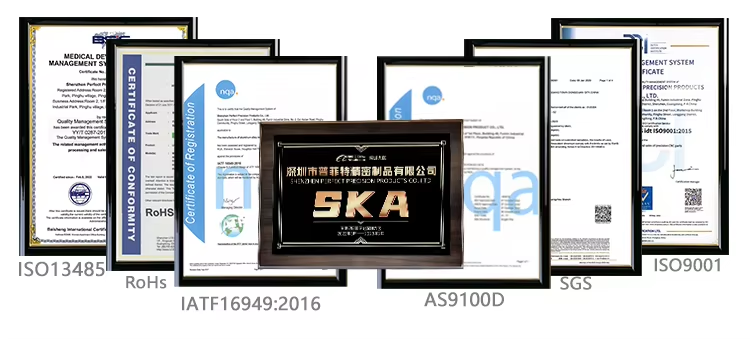
We are proud to hold several production certificates for our CNC machining services, which demonstrates our commitment to quality and customer satisfaction.

"Great CNC machining impressive laser engraving best I've ever seen so far. Good quality overall, and all the pieces were packed carefully."
"Excelente me siento contento me sorprendio la calidad de las piezas un gran trabajo. This company does a really nice job on quality."
"If there is an issue they are quick to fix it. Very good communication and fast response times. This company always does what I ask."
"They even find any errors that we may have made. We have been dealing with this company for a number of years and have always received exemplary service."
"I am very pleased with the outstanding quality of my new parts. The price is very competitive and the customer service is among the best I've ever experienced."
"Fast turnaround, fabulous quality, and some of the best customer service anywhere on Earth."
A CNC router is a game-changer for factories looking to improve precision, efficiency, and product quality. Whether you're in the woodworking, sign-making, or custom manufacturing industries, the CNC router offers the versatility and automation necessary to take your factory to the next level.
By investing in a CNC router, your factory can streamline operations, reduce costs, and unlock new opportunities for growth and innovation. If you want to stay competitive in today's fast-paced manufacturing world, a CNC router is the key to achieving lasting success.
A: Accuracy depends on machine build quality, tooling, and setup, but most CNC router tables offer tolerances around ±0.1 mm (0.004 in) or better. Industrial models may provide even higher precision.
A: Yes. With the appropriate software and tooling, CNC router tables can create 3D reliefs, carvings, and contours, especially on wood, foam, and plastic. Some high-end models even offer 4-axis or 5-axis capabilities for more complex geometries.
A: The main differences are:
• Material Focus: Routers are optimized for softer materials (wood, plastic), while mills handle harder metals.
• Spindle Speed: Routers use higher spindle speeds; mills prioritize torque.
• Construction: CNC mills are more rigid and heavy-duty, while routers are faster and often have larger work areas.
A: It can process a very broad range of materials, including woods (MDF, plywood, hardwood), plastics (acrylic, polycarbonate, PVC), metals (aluminum, brass, soft steels), composites (carbon fiber, fiberglass), as well as foam and other soft materials.
A: The critical parts include the worktable (bed) for mounting materials, the high-speed spindle/router head, the gantry system for multi-axis movement, the drive system (like ball screws or rack-and-pinion), and the controller unit with CAM/CAD software to execute the G-code instructions.